The Etak Chronicles
THE SPIRIT CURRENT
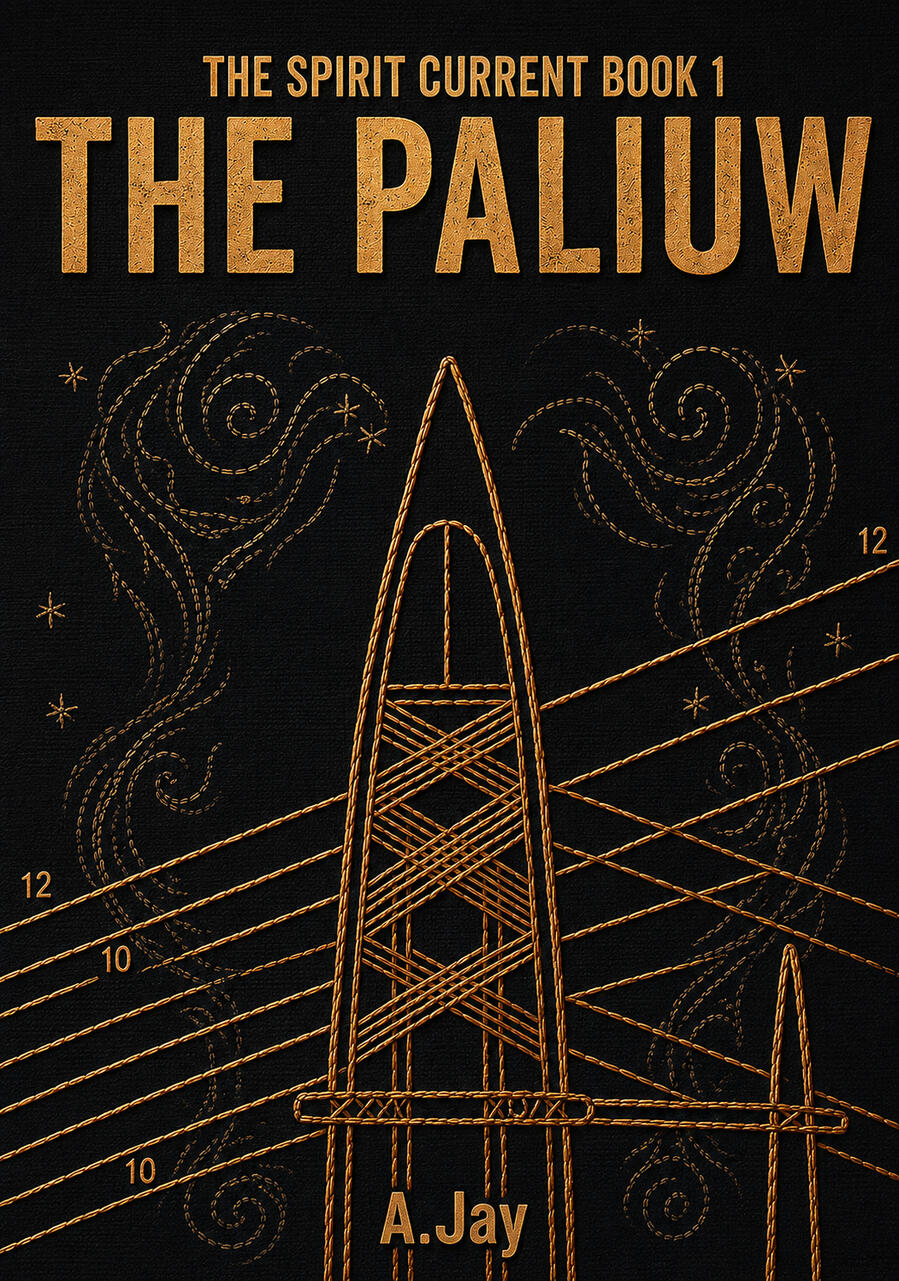
Book One
THE PALIUWThe reef has been dying for three years.
Lae is twelve years old and has never known hunger before this year. She knows the reef is dying the way she knows everything — not from being told, but from watching.
She has watched the coral bleach. She has watched the bright fish leave, and then the grey ones. Nobody goes torch fishing at night any more, because there is nothing left to draw to the surface.Somewhere out past the horizon there is knowledge that might help: how other people feed themselves on other kinds of island, what grows in soil that isn’t sand, what a place looks like when it isn’t running out. Nobody on the atoll has been there. Nobody knows if the crossing can be made.The paliuw was considered the most dangerous part of any voyage. Not the storms. Not the open ocean. The leaving itself.
Book Two
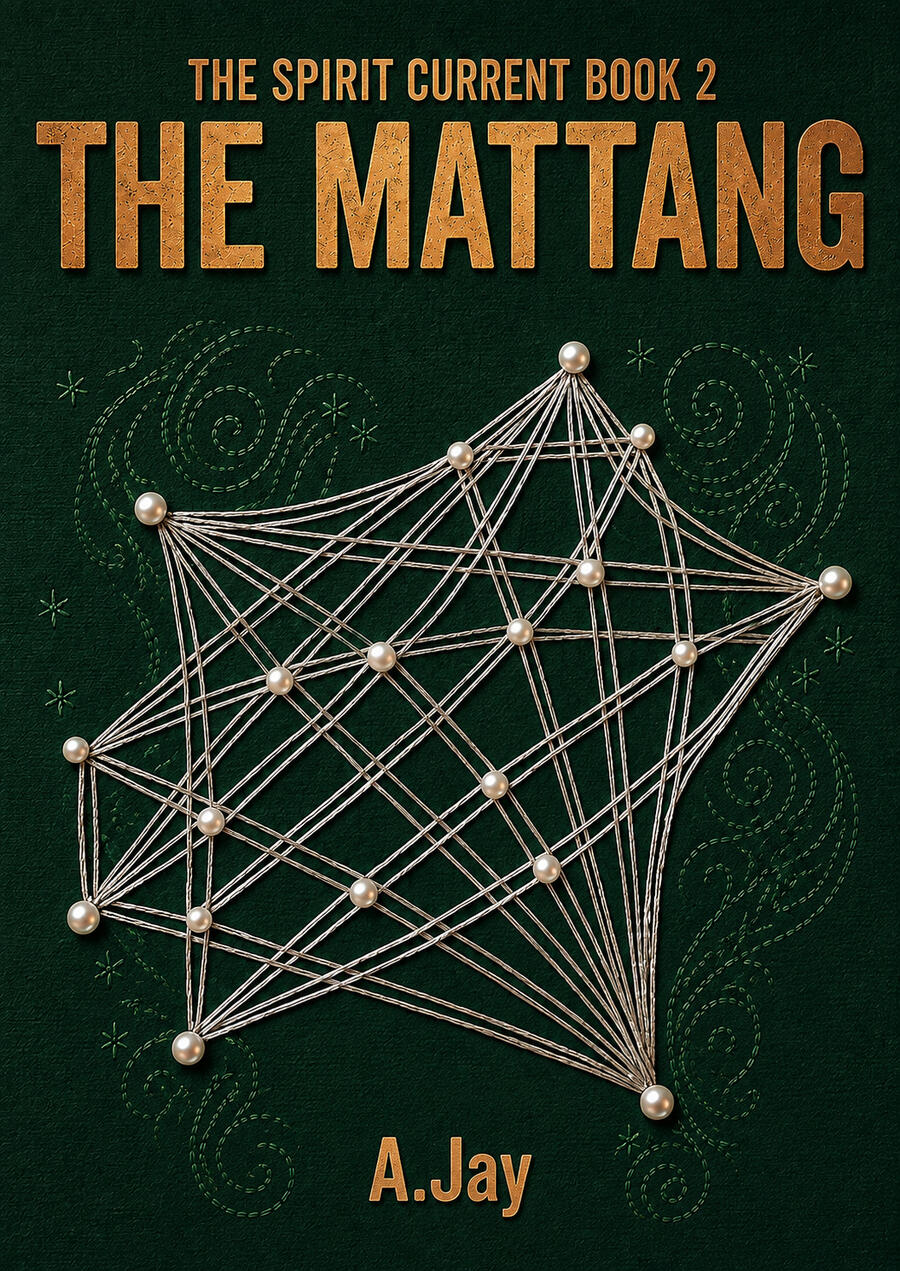
THE MATTANGThe crew of the sailing canoe Iroij-Lik has crossed the open Pacific from a dying coral atoll to the high islands — a world of mountains and running water and deep soil, of food that grows without being coaxed, of people who have been here so long they have stopped finding it remarkable.Now begins the harder work: learning what this place knows. Not collecting it — learning it, which is slower, and requires being taught, which requires being trusted. There is a language to acquire, a lagoon that does not behave the way a lagoon should, and a set of questions about how far this road actually goes and who among them is willing to follow it.A mattang is a navigation instrument built from the curved ribs of palm fronds, bound with cord and weighted with cowrie shells. It is not a map. It does not show where the islands are.
It shows the shape of how the ocean moves around them — the way deep swells are bent and reflected by land that cannot yet be seen.
Book Three
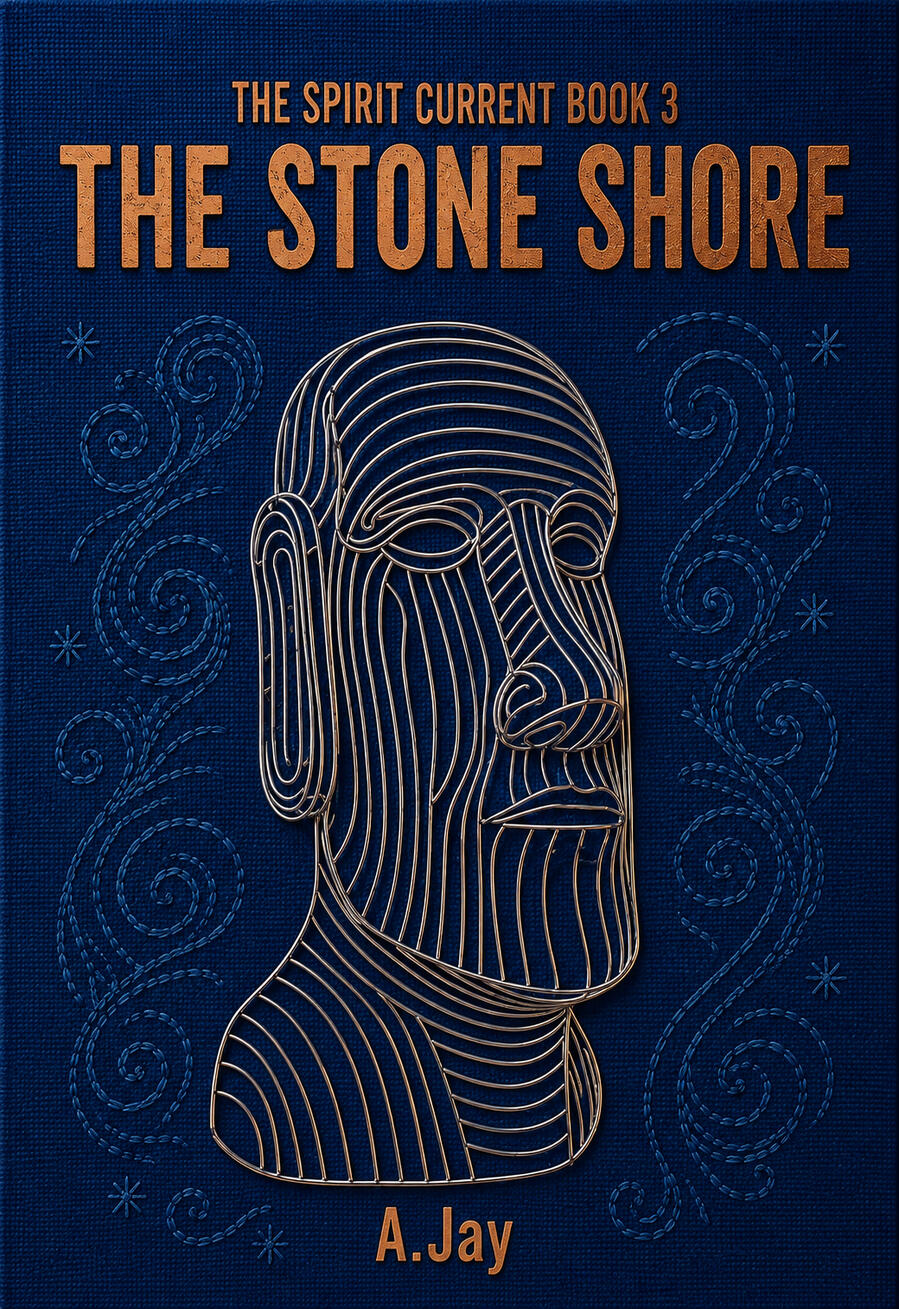
THE STONE SHORETe Pito o te Henua. The navel of the world.That is what the island’s people call it . They mean it as a geographical fact, as they understand geography: the place the ocean currents bring things to, and the place from which those things depart, made permanent in stone.Lae has been travelling for eighteen months. She is a navigator from a dying coral atoll, she has crossed a very great deal of ocean to find knowledge that might help her people, and she is extremely good at her job. What she finds when she arrives is an island in the middle of a long emergency — the trees gone, the soil leaving, the knowledge system partially broken, the god silent. An island that has been managing its own loss for three generations and has become very precise about what it has left and how it must be held.This is the book where the crew stops passing through and begins to work. The stone shore does not let go easily. That is not a flaw; that is the island being honest about what it needs.
Book Four
THE ETAKAfter nearly two years at sea and on islands, Lae has crossed the Pacific and reached the Stone Coast — the western edge of what we now call South America.
It is not an island. It does not behave like one. It is a continent, with a mountain range behind it and cities on its rivers and a civilisation that has never in its history had a reason to look out to sea and wonder what might be there.She has arrived somewhere that does not have a category for her.
Etak is a Micronesian navigation concept with no equivalent in European thinking about movement through space.
In Western navigation, the boat moves and the land stays still: you leave one island, you cross the ocean, you arrive at another. In etak, the reverse is true. The navigator holds still while the islands move past — the destination coming toward her, the home receding behind.
Her task is not to travel through space but to read the ocean correctly, so that the islands arrive at the right time.
Book Five
THE REBBLIBLae is heading home. She has been at sea and on islands for nearly three years — long enough that the ocean has stopped being a thing she is crossing and become the place she lives. She is carrying food, medicine, and a great deal of knowledge she cannot yet fully read.
The way back is not the way out. The currents that carried her east will not carry her west. The seasons have moved. And the navigator making the return crossing is not the same person who made the first one.
A rebblib is a stick chart — built, like a mattang, from palm rib and cord and cowrie shell, but larger. A mattang is a teaching chart. A rebblib covers ocean. It encodes not just how swells behave around a single island group but the pattern of the whole sea: the currents, the transitions, the roads between island chains too far apart to see from any single point.
You learn to read one over years.
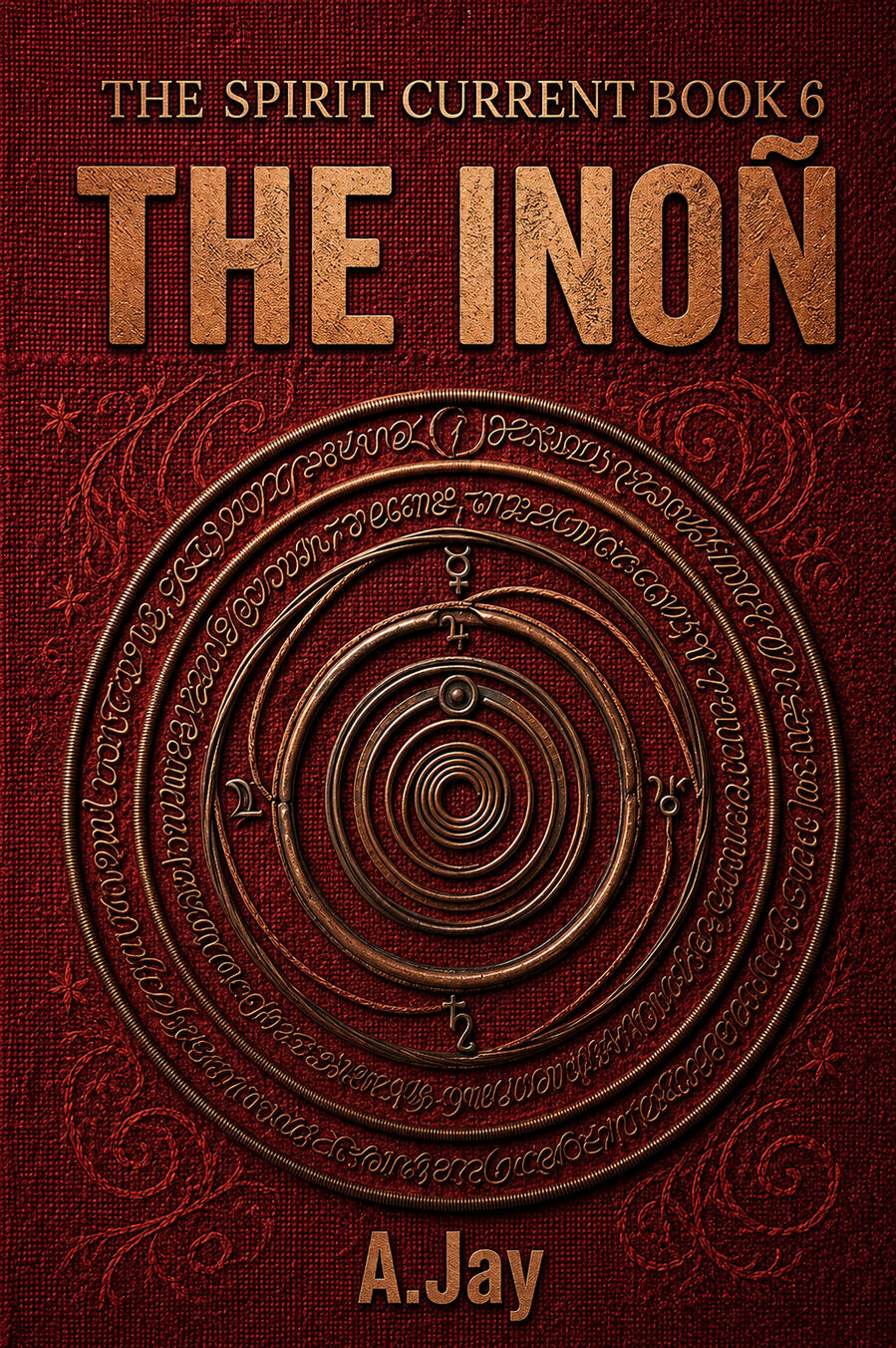
Book Six
THE INOÑShe was born on the Pacific Ocean.She has been telling her people’s history for years, and she is the last person alive who holds certain parts of it — the routes, the stars, the currents, the crossings made for centuries by people whose names survive only in the chants.Two Franciscan monks have come to write it down.Brother Tomás has spent two years in these islands acquiring a trade tongue he can follow at roughly half speed. He is about to attempt something considerably harder than translation: setting down, in an alphabet built for Latin, a body of knowledge that was never meant to be written at all — that was built to live in hands and bodies and memory, and that may not survive the transfer.This is the final book and it will bring you somewhere you can visit today.
A.Jay